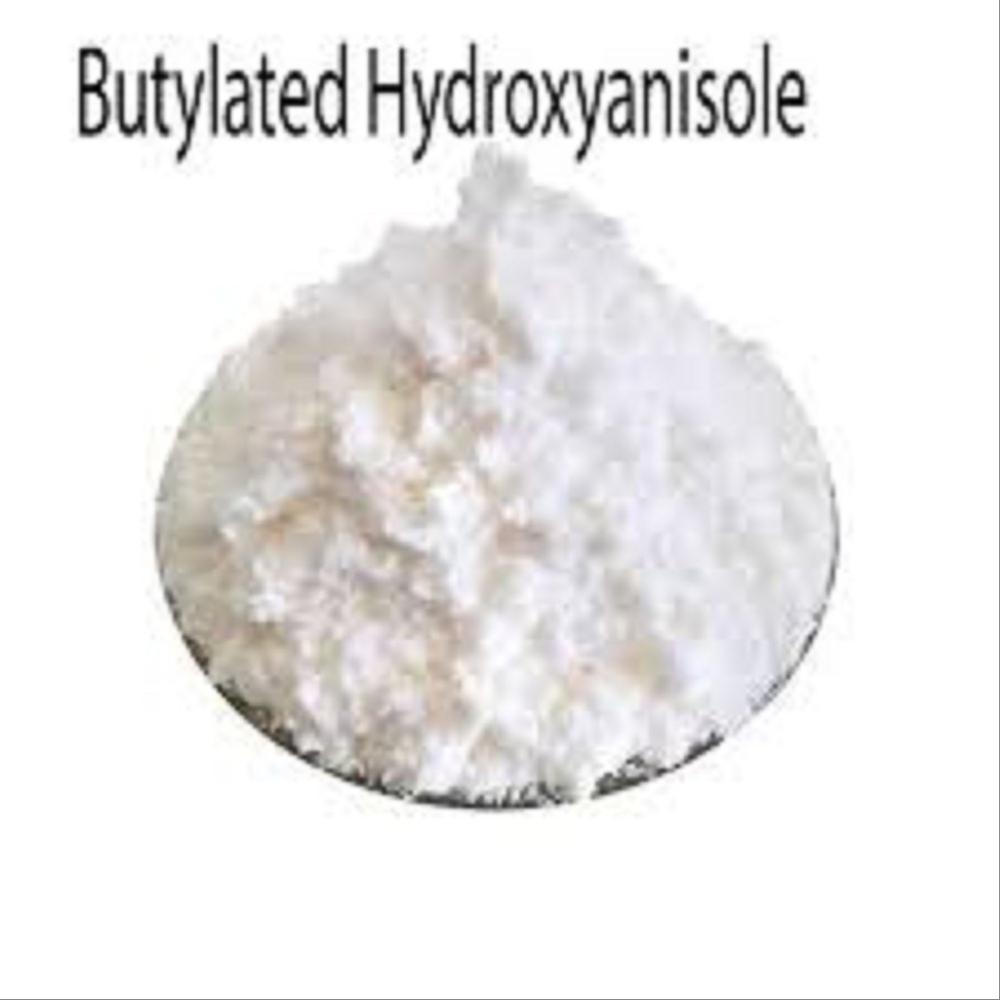
Butylated Hydroxyanisole (BHA) is a synthetic antioxidant, a waxy solid (E320), used to prevent fats/oils from going rancid, extending shelf life in foods, cosmetics (lipsticks), pharmaceuticals, animal feeds, rubber, and petroleum products. It's a mixture of two isomers (2-tert-butyl-4-hydroxyanisole & 3-tert-butyl-4-hydroxyanisole) and is considered safe at typical dietary levels, though high doses in animal studies raised concerns, leading to ongoing safety evaluations for potential endocrine disruption and carcinogenicity.
What it is:
A synthetic antioxidant derived from petrochemicals, often a waxy solid.
A blend of two isomers: 2-tert-butyl-4-hydroxyanisole and 3-tert-butyl-4-hydroxyanisole, identified as E320 in food.
Where it's used:
Food: Preservative in cereals, chewing gum, potato chips, fats, oils.
Cosmetics: In lipsticks, moisturizers, and other products to prevent spoilage.
Pharmaceuticals & Animal Feed: As a preservative.
Industrial: In rubber, petroleum products, and as a lubricant additive.
Safety & Concerns:
Food Additive: Regulated and authorized, with maximum limits set for food and feed.
Animal Studies: High doses caused temporary liver/lung issues and tumors in rat forestomachs, but these effects often had clear thresholds and were sometimes reversible.
Human Studies: Epidemiological data shows no increased cancer risk at typical dietary intake levels, but research continues for subtle effects like endocrine disruption.
Allergies: Can cause contact dermatitis in sensitive individuals.
Broad-Spectrum Antioxidant Protection
BHA is widely recognized for enhancing the stability of fats and oils, preventing oxidative deterioration in a variety of products. Its antioxidant properties make it especially valuable in the preservation of packaged foods, cosmetics, and pharmaceuticals, safeguarding taste, aroma, and nutritional quality.
Industry-Compliant Quality and Safety
Produced via alkylation of p-methoxyphenol with isobutylene and compliant with GRAS and food safety guidelines, BHA is approved for use by the FDA and EFSA. It is provided with complete documentation, including a Certificate of Analysis and lot number, assuring quality to manufacturers and suppliers.
Optimal Handling and Storage Guidelines
BHA remains stable when stored in cool, dry, well-ventilated areas, protected from light and moisture. It is packaged in robust fiber or HDPE drums to maintain product integrity during transport and storage, ensuring a shelf life of up to two years from the manufacturing date.
FAQ's of Butylated Hydroxyanisole:
Q: How is Butylated Hydroxyanisole (BHA) commonly used in industry?
A: BHA is primarily used as an antioxidant to prevent rancidity and extend the shelf life of fats and oils in foods, cosmetics, pharmaceuticals, and packaging materials.
Q: What are the benefits of using BHA in food products?
A: The main benefit of BHA in food products is its ability to inhibit oxidation, which helps preserve flavor, color, and nutritional value by preventing the fats from becoming rancid.
Q: What storage conditions are recommended for BHA?
A: BHA should be stored in a cool, dry, well-ventilated space, protected from light and moisture to maintain its stability and effectiveness over its two-year shelf life.
Q: When should a Certificate of Analysis or lot number be requested for BHA shipments?
A: A Certificate of Analysis and lot number are available upon request and should be obtained whenever product quality verification or traceability is required by manufacturers or end-users.
Q: Where is BHA compatible and not compatible for use?
A: BHA is compatible with most edible fats and oils. It is less effective or suitable in aqueous systems due to its limited solubility in water.
Q: What process is used to manufacture BHA?
A: BHA is produced through the alkylation of p-methoxyphenol with isobutylene, resulting in a high-purity product suitable for food and pharmaceutical applications.
Q: Is BHA safe for consumption and environmental release?
A: BHA is generally regarded as safe within recommended usage limits and is approved by international authorities. However, it should not be released directly into the environment and must be disposed of according to local regulations.
Tell us about your requirement
Price:
Quantity
Select Unit
50
100
200
250
500
1000+
Additional detail
Mobile number
Email
Name
Comapny Name
Phone Number
Email Id
City / State
Confirm Your Requirement
Verification Code
Did not receive yet?
Resend OTP
You’re Done!
We have received your requirements and will reply shortly with the best price.






 Send Inquiry

 Send Inquiry
 Send Inquiry
 Send SMS